

Inflatable Cofferdam FAQ
Inflatable Cofferdams: Common Questions, Plain Answers
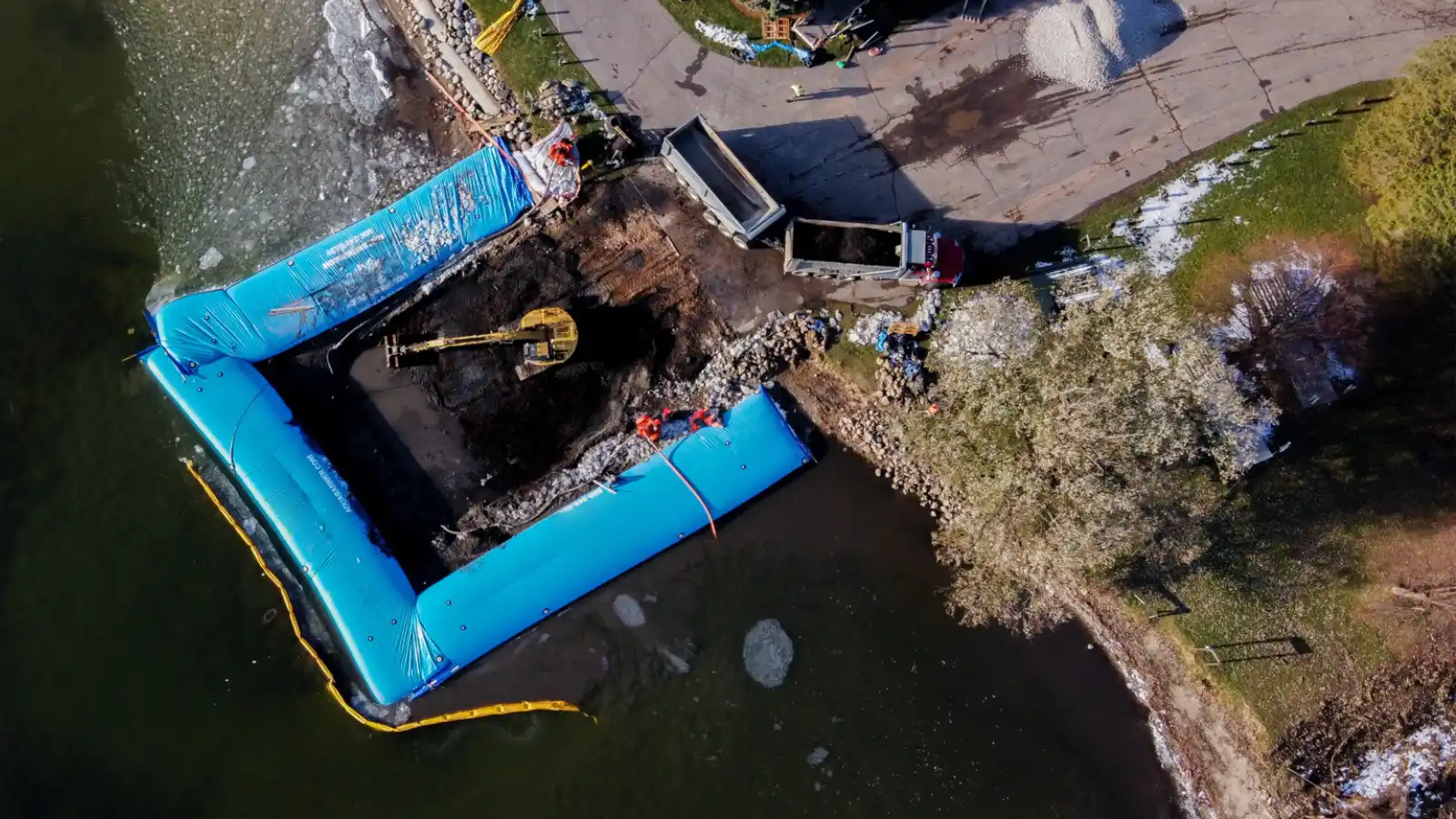
Inflatable cofferdams (water-inflated cofferdams) are a fast, portable way to control water for construction dewatering and temporary flood protection. They help crews isolate a work zone, reduce downtime, and simplify site logistics compared to building berms or installing rigid systems.
If you can share your footprint, site surface (soil, rock, concrete), expected depth/head, and flow conditions, we can recommend a configuration and whether buy vs rent makes the most sense.
Inflatable Cofferdam FAQs
These are the questions we hear most from contractors, municipalities, and site managers evaluating portable cofferdam systems for dewatering and water control.
1) Prep the surface (remove sharp debris, address large voids).
2) Position the cofferdam to the planned footprint and tie-in points.
3) Connect fill/vent fittings and hoses.
4) Fill until shape, seal, and stability are achieved.
5) Begin controlled pumping/dewatering as required.
• Dewatering/discharge controls (often tied to stormwater permits and turbidity limits)
• Erosion and sediment control measures and inspection documentation
• Wetlands/waterway disturbance coordination when applicable
• Floodplain, right-of-way, and local jurisdiction requirements
Need a Portable Cofferdam Recommendation?
If you’re comparing an inflatable cofferdam to sheet piling, berms, or modular panels, focus on footprint, surface conditions, expected depth/head, and how you’ll manage pumping and discharge. One Clarion supplies portable cofferdam systems for construction dewatering and temporary flood protection, with buy and rental options to match your project schedule. For projects where logistics matter, we can also help you plan fill/drain water handling using practical site equipment such as pumps, hoses, and water trailers.