

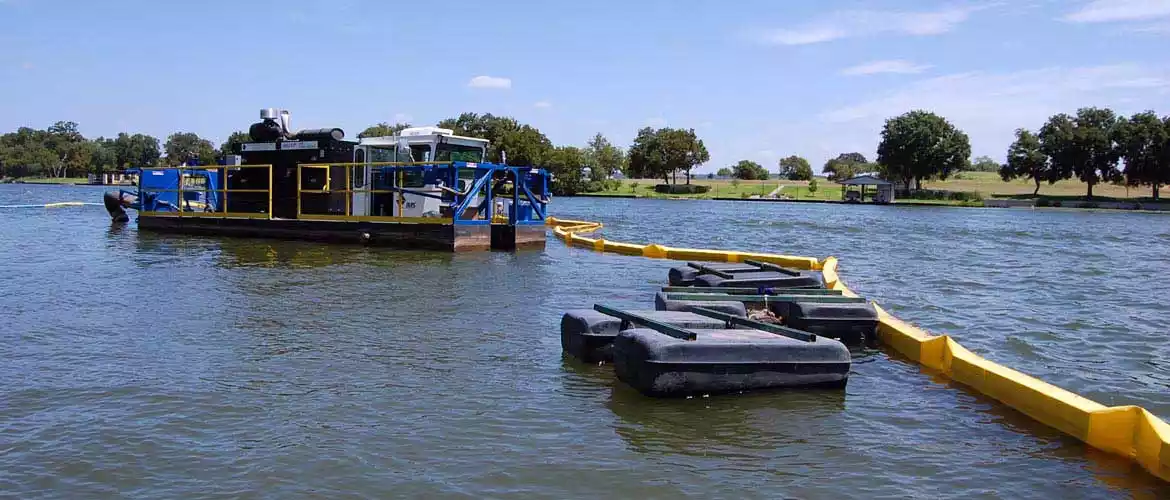
Installing a turbidity curtain is more than placing a barrier in the water. It requires thoughtful planning, proper anchoring, and careful assembly to contain sediment and protect the environment. A correctly installed silt curtain helps your project stay compliant with environmental regulations while reducing turbidity and erosion. Each job site has different variables. Whether your project is near a shoreline, bridge, or open water, your installation plan should reflect specific site conditions, including water depth, current speed, and the type of curtain being used.
Project Materials
Before installing anything in the water, ensure your site is prepared and all components are ready. Having the right materials in place ahead of time prevents delays and helps your team stay safe and efficient during deployment.
- Turbidity curtain sections (in order of deployment)
- Onshore and in-water anchors
- Bridle lines and anchor buoys
- Furling ropes or retrieval lines
- Workboat or winch system
- Two-way communication (radio or phone)
- Clean, flat shoreline staging area
The curtain type matters. Type I curtains are suited for calm water. Type II and III curtains are stronger, designed for moving water or tidal conditions. Before starting, confirm your plan with a sales representative. Variables like sloping bottoms or wave exposure may call for specialized Marine Accessories, including bridle lines, anchor buoys, and retrieval ropes. Your equipment and setup must be matched to site requirements and curtain specifications.
Preparing The Shoreline
Site prep is critical to a successful installation. Before assembling or launching the curtain, take time to verify anchor locations and set up a clean, organized area for your crew to work.
- Review your site plan to confirm the curtain alignment and anchor layout.
- Install onshore anchor points and test them for secure placement.
- Pre-position in-water anchors and buoys according to the plan.
- Set up a clean, flat staging area large enough for curtain assembly.
- Arrange curtain sections in order based on their launch sequence.
Connecting Turbidity Curtain Sections
During the turbidity curtain installation process, connecting the sections of turbidity curtain is an important step. Follow the steps below for a general guideline of connecting turbidity curtain sections.
- 1. Unfold the first section with the load cable pointing away from shore.
- 2. Align and unfold the next section beside it.
- 3. Tie curtain edges together using rope or zip ties from top to bottom.
- 4. Join the load cables securely using hooks or shackles.
- 5. Attach furling lines (1 per float) if not pre-installed.
- 6. Bundle the curtain skirt upward and tie it to the floats using the furling lines.
Be sure to have adequate space to unfurl the turbidity curtain sections. Take special care to make sure each component of your turbidity curtain is in place, including any reefing lines. Double check the turbidity curtain components with your sales representative.
Floating Turbidity Barrier Installation
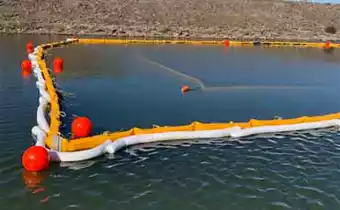
Once the turbidity barrier sections have been connected, the turbidity curtain installation process can continue. The connected sections of the turbidity curtain can be floated/towed to its proper location section by section.
- 7. Slide the first bundled section into the water gently from the shoreline.
- 8. Attach a tow line to the top load cable.
- 9. Use a boat or winch system to pull the curtain into place.
- 10. Continue launching and connecting sections until the entire curtain is floating in position.
How To Anchor Floating Turbidity Barrier
Anchoring holds the curtain in place against currents, tides, and weather. The curtain should be firmly secured at both ends and connected to all intermediate anchors for stable deployment.
- 11. Connect both ends of the curtain to the shoreline anchor points.
- 12. Attach bridle lines from each curtain joint to the in-water anchors.
- 13. Tighten anchor lines to remove slack and maintain the planned alignment.
Lowering The Turbidity Curtain Skirt For Full Deployment
Once the curtain is fully anchored and aligned, it's time to lower the skirt into the water. This allows the curtain to begin capturing sediment and minimizing turbidity in the work zone.
- 14. Loosen the furling lines on the first section.
- 15. Allow the skirt to sink to its full operating depth.
- 16. Retie the furling ropes so they remain attached for easy future retrieval.
A properly installed turbidity curtain helps protect water quality and ensures compliance with environmental standards. Each step in the process, from site preparation to anchoring and skirt deployment, plays a critical role in the barrier’s effectiveness. Take time to follow the sequence carefully, confirm each connection, and make adjustments as needed based on site conditions. If you need help selecting the right curtain type or accessories, consult a trusted supplier who understands your project requirements. With the right approach, your turbidity barrier will provide dependable sediment control from start to finish.